Gig & online sellers · Side hustle · Form B
Do you pay tax on Shopee, Grab or TikTok Shop income in Malaysia?
Yes, if the selling is a real, recurring operation. But you are taxed on profit, not on sales, so the number that matters is what is left after your costs. Any business-type side income also moves your whole return onto Form B, salary included, due 30 June or 15 July on e-Filing.
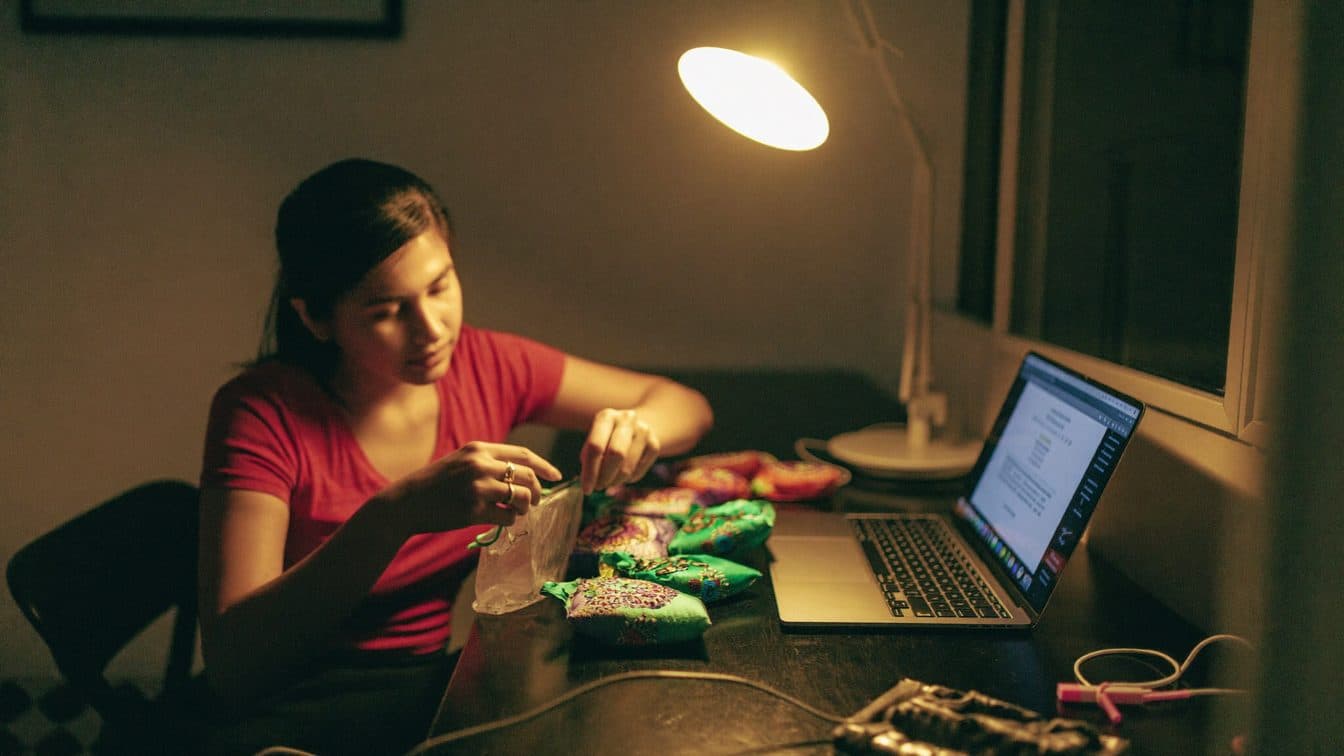
The worry lands in every side-hustler's head sooner or later. You have been selling on Shopee, driving Grab at weekends, or moving stock through TikTok Shop, the money is real, and suddenly you wonder whether LHDN is going to come knocking. Most of the panic dissolves once you understand one idea, so let us start there.
Tax is on profit, not on sales
You are not taxed on the money that flows into your account. You are taxed on what is left after the costs of earning it. If you did RM60,000 of Shopee sales but spent RM45,000 on stock, postage and platform fees, your business income is RM15,000, and that RM15,000 is what enters the tax calculation, not the RM60,000.
Once people see that, the fear usually shrinks to something manageable, because small side income after real costs and your personal reliefs often owes very little, or nothing at all.
Is your side income even taxable?
Not every extra ringgit is business income. What decides it is the pattern of what you are doing, not your intention. Selling off your old phone or a few personal items once in a while is not a trade and is not taxed. But consistent, organised selling, the kind that looks like a real operation month after month, shows what LHDN calls the badges of trade, and that is business income you declare, minus your costs.
A weekend Grab habit, a running TikTok Shop, a Shopee store you restock every week, a steady run of brand deals paid in free product, these sit firmly on the taxable side.
Which form, and where your salary goes
This trips up a lot of employees who start a side hustle. The moment you have any business-type income, freelance, gig, commission, Shopee, TikTok Shop, your whole return moves to Form B, and your salary goes inside that same Form B. You do not file a separate BE for the job and a B for the business.
This matters because filing a BE when you had business income does not count as having filed at all. LHDN treats the business income as unreported, so getting the form right is not a small detail. If you are not sure which one you are, Form B vs Form BE settles it in a minute, and how to file Form B walks the actual submission.
The Form B deadline is 30 June, with an e-Filing grace period to 15 July.
How much tax, actually
Here is the reassuring part, with real numbers. Say your salary already leaves you with RM47,000 of chargeable income after reliefs. The tax on that is RM1,320. Now add RM12,000 of net side income on top: chargeable income becomes RM59,000 and the tax becomes RM2,490.
So RM12,000 of side income cost you RM1,170 in extra tax, a little under 10% of it. Not nothing, but a long way from the number most people fear when they imagine being taxed on their sales. Want your own figure? Our free tax calculator runs the current rates.
What you can actually deduct
Since tax is on profit, your deductions are the costs of making that profit. Deductible, when spent wholly to produce the income, are things like platform and payment fees, your stock, advertising, software subscriptions, the business share of your phone and internet, delivery petrol and work travel, a reasonable home-office portion of rent and utilities, paid helpers, and professional fees.
What you cannot deduct is just as important: your own "salary" or drawings from the business, personal living costs, ordinary clothes, traffic fines and summonses, and the personal half of any mixed bill.
Equipment is a special case. A laptop, camera or phone you buy for the business is not expensed in one go, it is claimed as a capital allowance. Small items costing RM2,000 or less each get a full write-off in the first year, capped at RM20,000 a year in total for an individual, while bigger assets are spread over several years. One rule to remember: the same laptop cannot be both a business capital allowance and a personal lifestyle relief, so pick one lane.
Even a loss year should be filed
If your side business lost money this year, do not skip the return. You must file Form B even at a loss, and a properly filed loss is actually an asset: it carries forward to offset future business profit for up to ten years, and a current-year loss can even offset your other income in the same year. Skipping the filing throws that value away.
The e-invoice worry, cleared up
A lot of small sellers have heard scary things about e-invoicing and assume they now have to issue one for every sale. For side-hustlers, that is not the case. While your annual turnover is below RM3,000,000, you have no obligation to issue e-invoices at all. The threshold was raised from RM1 million to RM3 million on 1 September 2026, its second increase in under a year.
If a client or platform asks for your Tax Identification Number so they can self-bill, giving it is normal and not a trap. The e-Invoice guide for freelancers has the full picture.
The bottom line
If your selling is a genuine, recurring operation, it is business income, so it goes in Form B alongside your salary, by 30 June (15 July on e-Filing). But you are taxed only on profit after real costs, so keep clean records of both your income and your expenses, and the number you actually owe is often far smaller than the scary sales figure in your head. When it is a loss year, still file, because that loss is worth money later.
Frequently asked questions
I already pay PCB on my salary. Isn't that enough?
No. PCB (monthly tax deduction) only covers your employment income. It does not touch your side income, which your employer knows nothing about. You still have to declare the side money and settle any tax on it yourself when you file.
My side income is small, like RM3,000 a year. Do I still declare?
If it is business income, yes, there is no minimum. The good news is that on a small amount you will likely owe little or no tax after your reliefs and the RM400 rebate. Declaring keeps you clean, and it is painless when the numbers are small.
Do I need to register a company or SSM to declare side income?
No. You can declare side income and claim your expenses without any SSM registration. Registering a sole proprietorship is optional and mostly helps with cleaner records as you grow. It is not a precondition for paying tax honestly.
Is a one-off sale taxable?
Usually not. Selling your own used belongings once (an old phone, your old furniture) is not business income. It becomes taxable when you do it regularly for profit, for example buying stock to flip on Shopee every month. If you are unsure where the line is, it is safer to declare.
Can I be taxed twice on the same money?
No. Your salary and side income are added together once and run through the tax brackets a single time. The side income is not taxed separately on top of an already-taxed salary. It simply fills the next bands above your salary.
Can I claim my laptop as both a business asset and a lifestyle relief?
No, pick one lane. The same laptop cannot be claimed as a business capital allowance and as a personal lifestyle relief. Claiming it twice is exactly the kind of thing an audit picks up.